How to Soften Hard Water at Home
Hard water is a common problem in many households, causing issues like dry skin, dull hair, limescale buildup, and damaged appliances. If you’ve been searching for how to soften hard water, this detailed guide covers the easiest and most effective methods you can use at home—without spending a fortune.
Whether you want a permanent solution or quick fixes, this article will help you understand what works best and why.
What Is Hard Water?
Hard water contains high levels of minerals—mainly calcium (Ca) and magnesium (Mg). While these minerals are not harmful to health, they create several household problems:
- White spots on taps, utensils, and showerheads
- Soap not lathering properly
- Clothes becoming dull after washing
- Scales forming inside pipes, geysers, and washing machines
If these issues sound familiar, it’s time to learn how to soften hard water at home using simple and effective methods.
How to Soften Hard Water at Home – Top Methods That Actually Work
Below are the most reliable methods you can use at home. Some offer instant results, while others provide long-term solutions.
1. Boiling – The Simplest Way to Soften Water
Boiling is one of the quickest and oldest methods of softening hard water.
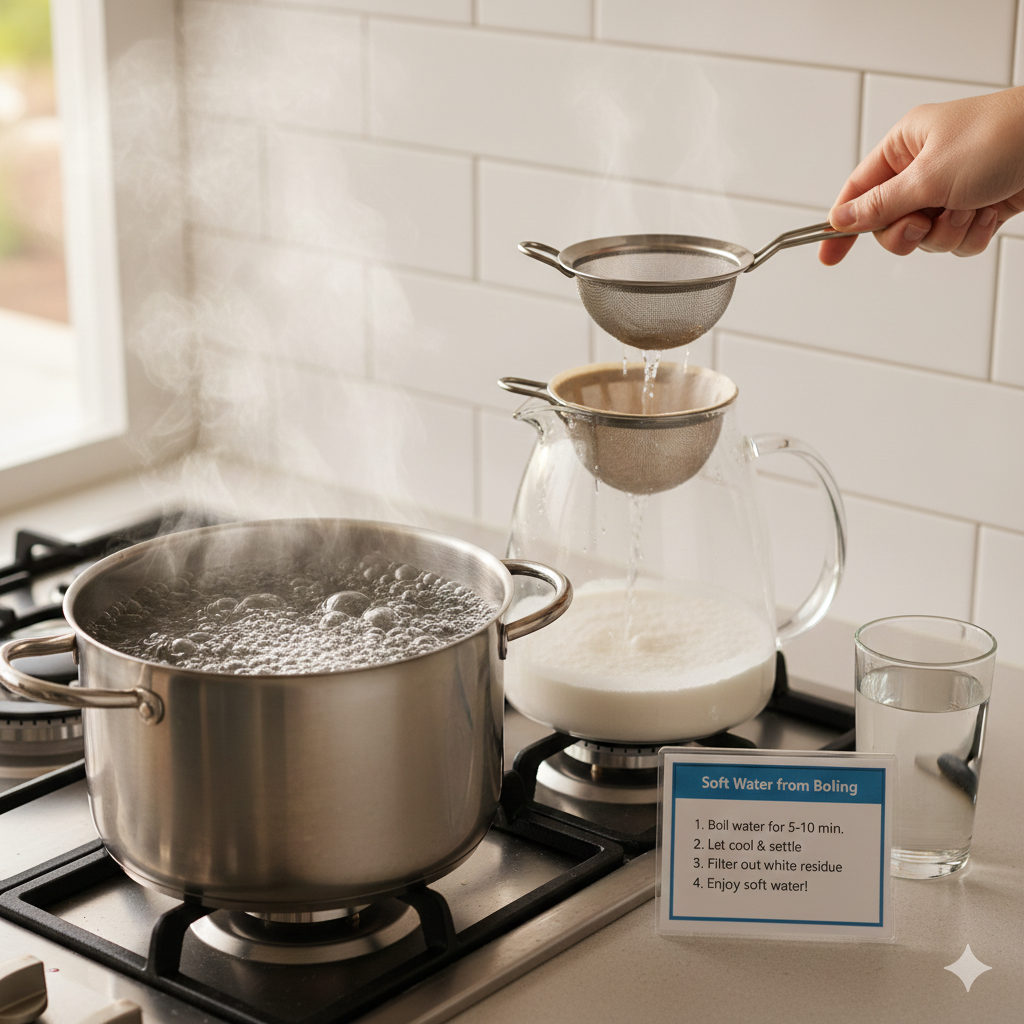
How It Works
- When water is boiled, calcium bicarbonate breaks down.
- The minerals settle at the bottom as solid deposits.
- The softened water stays above the sediment.
Best For
- Drinking water
- Cooking
- Small batches of water
How to Use
- Boil water for 10–15 minutes.
- Let it cool naturally.
- Pour the top layer into another container.
This method is not ideal for large quantities but excellent for daily drinking needs.
2. Use Water Softening Filters
A household water filter with softening cartridges is a simple and effective way to reduce hardness.
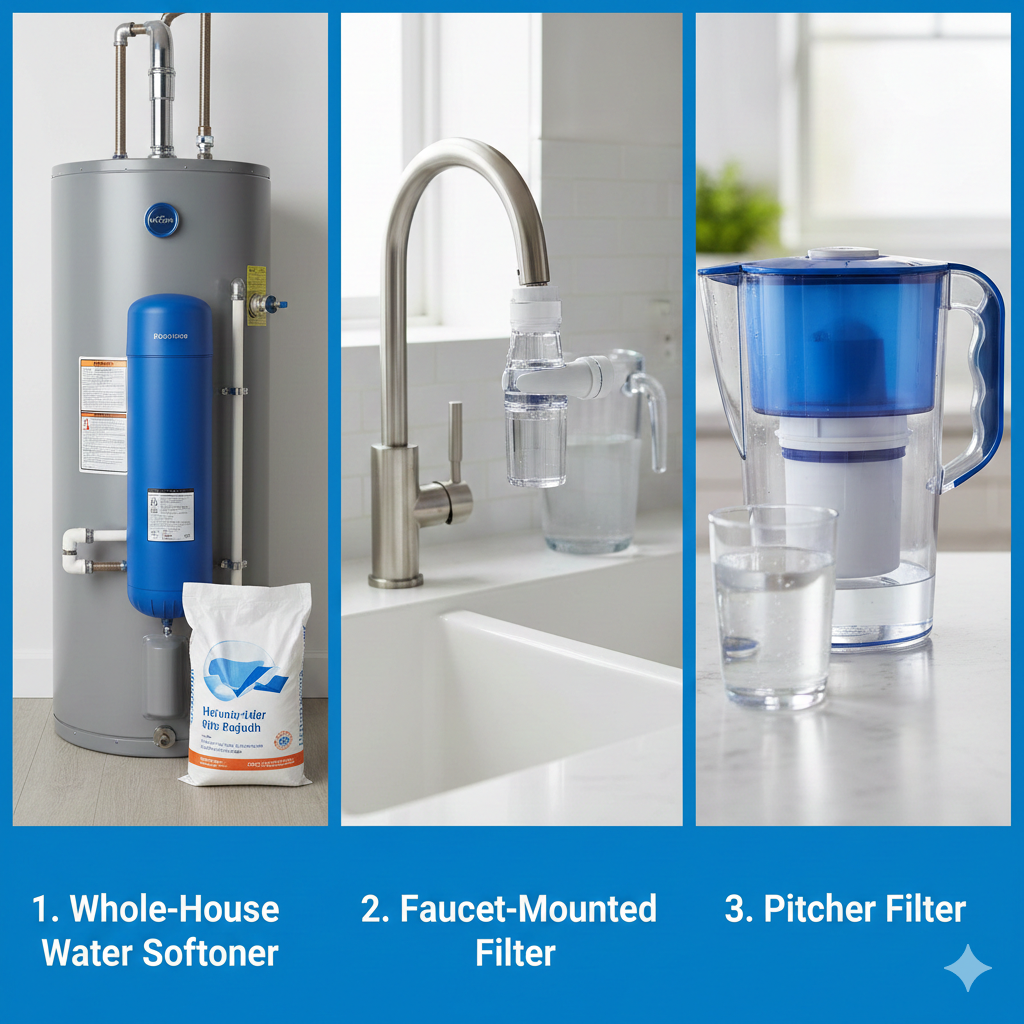
Types of Filters
- RO (Reverse Osmosis) filters
- Activated carbon + softening resin filters
- Under-sink water softeners
Benefits
- Removes calcium and magnesium
- Improves taste
- Safe for drinking
- Works without chemicals
If you’re looking for a hassle-free, long-term solution, installing a water softening filter is the best option.
3. Add Washing Soda (Sodium Carbonate)
Washing soda is a proven, low-cost method for softening water used for cleaning and laundry.
How It Works
- Sodium carbonate reacts with hard minerals.
- It forms a precipitate and removes hardness.
How to Use
Add 1 tablespoon of washing soda per bucket of water.
Best For
- Washing clothes
- Cleaning floors
- Mopping
Note: This method is not suitable for drinking water.
4. Use Vinegar – Natural & Safe Softening
If you prefer natural methods, vinegar is an excellent choice.
Why It Works
Vinegar is acidic and helps neutralize the minerals responsible for hardness.
How to Use
- For laundry: Add 1 cup of white vinegar during the rinse cycle.
- For cleaning: Mix equal parts vinegar and water to remove limescale from taps, tiles, and showerheads.
Best For
- Laundry
- Utensil cleaning
- Removing limescale
Tip: Do not use vinegar in appliances with metal parts unless recommended.
5. Install a Whole-House Water Softener (Best Long-Term Solution)
A salt-based ion-exchange water softener is the most reliable method if you want completely soft water throughout your home.
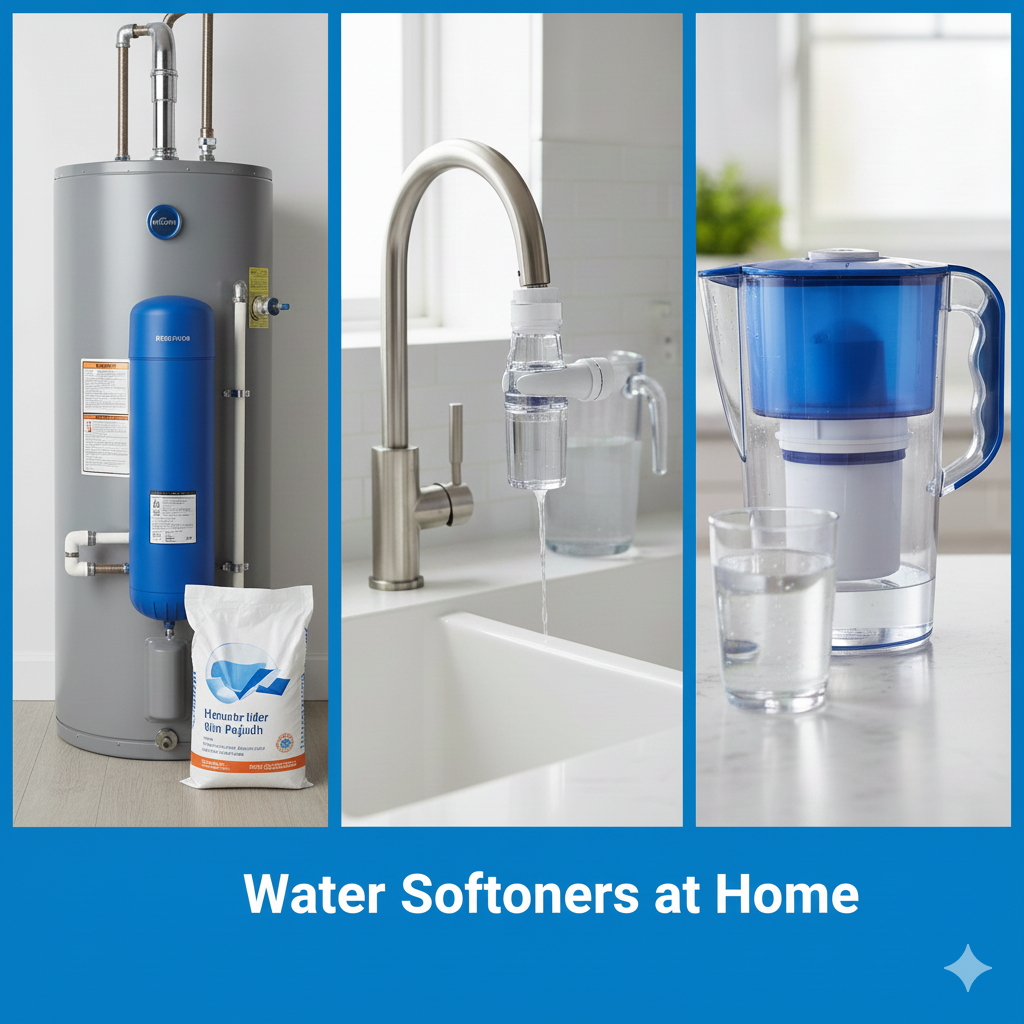
How It Works
- Resin beads inside the softener trap calcium and magnesium.
- Sodium ions replace the hardness minerals.
- The result is fully softened water.
Benefits
- Protects plumbing and appliances
- Prevents limescale buildup
- Makes skin and hair healthier
- Improves cleaning efficiency
Although costlier, this method provides guaranteed, long-term results.
6. Use a Magnetic or Electronic Water Conditioner
These are modern, easy-to-install devices that do not require salt.
How It Works
- They change the structure of mineral particles.
- Minerals lose their ability to form scales.
- Water flows freely without deposits.
Best For
- Homes with moderate hard water
- Those looking for low-maintenance solutions
Though not true “softeners,” conditioners reduce the negative effects of hardness.
7. Using Lemon Juice for Hair & Skin
Hard water can damage skin and hair, making them dry and itchy.
How Lemon Helps
Lemon is acidic and helps counteract the alkalinity of hard water.
How to Use
- Add 1–2 tablespoons of lemon juice to a bucket of bathing water.
- Or rinse hair with a mixture of water and lemon juice.
This won’t soften the water fully but will reduce its harsh effects.
Why You Need to Soften Hard Water
Softening water brings multiple everyday benefits:
For Home
- No limescale stains
- Longer lifespan for geysers, washing machines, and RO systems
- Better cleaning results for clothes and dishes
For Personal Care
- Softer skin
- Smoother hair
- Reduced dryness and itchiness
For Budget
- Saves money on appliance repairs
- Reduces soap and detergent usage
If you’ve been struggling with water quality, learning how to soften hard water at home is essential.
Which Method Is Best for You?
| Hard Water Level | Best Method |
|---|---|
| Mild hardness | Vinegar, boiling, filters |
| Moderate hardness | Washing soda, RO filter, conditioner |
| High hardness | Whole-house softener (ion-exchange) |
Choose a method based on your budget and hardness level.
FAQs on How to Soften Hard Water
1. What is the easiest way to soften hard water?
Boiling is the easiest method for drinking water, and vinegar is great for cleaning.
2. Is it safe to drink softened water?
RO-filtered softened water is safe to drink. Avoid drinking chemically softened water.
3. Do magnets really soften water?
They don’t soften water chemically but reduce scaling effects.
4. Why is hard water bad for skin and hair?
Hard water dries out your skin and makes hair rough due to mineral deposits.
5. Should I buy a water softener?
If you face severe scaling and damaged appliances, a whole-house softener is worth it.
Final Thoughts
Knowing how to soften hard water can save you from multiple household problems, from clogged pipes to dull skin. Whether you choose boiling, filters, vinegar, or a full-fledged water softener, each method offers unique benefits. Pick the one that suits your needs and improve your home’s water quality effortlessly.
